
residential design
I design practical, place-based systems that transform spaces into productive, resilient, and regenerative environments.
Each project responds to the unique conditions of the site—its climate, resources, and the people it supports—integrating elements such as food production, water systems, soil health, and functional outdoor living.
The focus is simple: low-input, long-term solutions that work with nature, build resilience, and improve how a space functions over time.
At its core, this work is about creating systems that not only meet immediate needs, but continue to give back—environmentally, socially, and practically.
BOWDEN RD
This project transformed a suburban backyard into a functional and inviting space for a young family—balancing everyday living with food production and ecological value.
The design focused on creating a space that feels both practical and considered, integrating productive garden elements with relaxed, usable areas for gathering and downtime. Edible plantings were incorporated throughout, making it easy to grow fresh food at home, while thoughtful habitat features support local birdlife and encourage greater biodiversity.
Careful attention was given to flow, aesthetics, and how the space would be used day-to-day—resulting in a backyard that is not only productive, but also a place to unwind, connect, and spend time together.
The outcome is a low-maintenance, multi-functional landscape that demonstrates how even small residential spaces can be designed to support both people and the natural environment
_JPG.jpg)


Yamble Drive
The Yamble Drive Garden Project transformed a residential property into a productive, resilient and visually appealing permaculture landscape. Designed to suit the site's unique conditions and the client's lifestyle, the project integrated edible gardens, functional planting, water-wise design and natural landscaping to create a space that is both beautiful and practical.
The result is a thriving garden that supports biodiversity, reduces maintenance over time and provides an abundant, enjoyable outdoor environment for everyday living.


St josephs
Public school
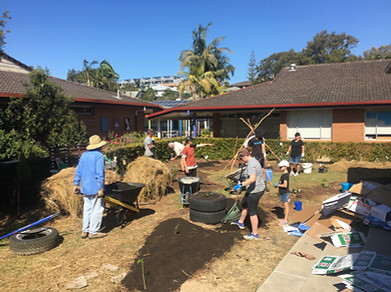
Supported the creation of a food and interactive garden at St Joseph’s Public School, transforming an underutilised space into a vibrant outdoor learning environment.
The design focused on hands-on engagement, incorporating edible gardens alongside creative, student-friendly features such as a teepee, outdoor reading nook, and a small book library. Upcycled and reclaimed materials were used throughout, demonstrating practical sustainability while keeping the project accessible and low-cost.
The result is a dynamic space that encourages curiosity, learning, and connection—giving students the opportunity to engage with food systems, nature, and each other in a meaningful, everyday way.


Firefly Food forest
One of my earliest and favourites. This project shows that no matter how poor your soil, you can always get productive. The aim was food security and so involved the design and establishment of a long-term perennial food system on heavily overgrazed clay soils, with a strong focus on regeneration and soil recovery.
The approach centred on rebuilding soil structure and function through layered planting, organic matter inputs, and low-disturbance techniques.
A diverse mix of perennial food species was introduced to create a resilient, self-supporting system that improves over time—enhancing water infiltration, increasing biodiversity, and reducing the need for ongoing inputs.
Designed as both a productive landscape and a regenerative system, the food forest demonstrates how degraded land can be restored into a thriving, functional ecosystem that supports both people and the environment.


